
What is DHI Hair Transplant?
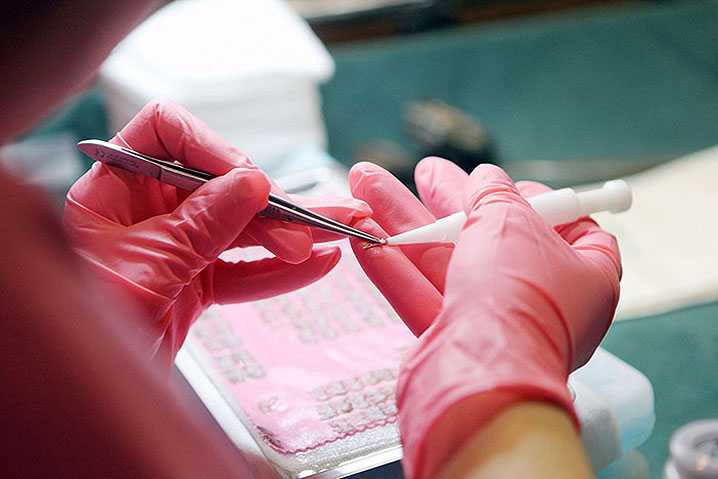
It is a method in which follicles are collected from the donor area with micromotors like classical FUE and hair follicles are placed on the scalp with special pens called choi. While hair transplantation takes place in three stages in the classical FUE method, this stage is reduced to two in the dhi method. In other words, the channel stage and the placement stage are performed at the same time. The most important feature of this procedure is that it can be performed without cutting the hair and does not require stitches.
If we look at the development of DHI Hair Transplantation, choi pens started to be used towards the end of the 2000s, these pens, which were initially standard, were developed over time and started to be made in sizes compatible with hair thickness. In this way, it has become popular due to the fact that there is no unnecessary incision in the hair, it shows rapid healing and is more practical in unshaven transplants.
DHI Hair Transplant Process
DHI Hair Transplant Preparation
Like all hair transplant operations, herbal and medical vitamin supplements and herbal teas should be discontinued one week before the operation. In case of a continuous medication, the medication used should be reported to your doctor, and if necessary, medication adjustment should be made again. Smoking should be stopped 1 week before the operation, or minimized if it cannot be stopped, this is very important for the survival of the implanted grafts and the healing of the tissue. Caffeinated drinks should be avoided especially on the day before the operation. It is recommended to come to the operation in a comfortable shirt or t-shirt, preferably buttoned in front. Your haircut will be done in the clinic after the photo shoot.
DHI Process Stages
Trichological hair analysis of the patient is performed before the procedure. The structure of the patient's hair strands and the hair affected by hair loss are determined. The donor area is anesthetized with the help of local anesthesia. Hair follicles are taken one by one from the nape area with a micromotor. After the tissue removal is finished, the area to be transplanted is anesthetized. The pen is selected according to the hair thickness and placed according to the direction of hair growth. In this way, the transplantation process is completed by preserving the normal hair of the normal person. Since there is no incision, the recovery period is shorter.
Post DHI Care and Recovery
Recovery after DHI is faster due to less possibility of edema and minimal scabs. Your donor area bandage is applied after the operation. The medical treatments you will use after the operation are explained to you by your doctor, and you are advised to rest the first night.
In the first 24 hours, there may be redness and slight swelling in the donor and transplantation areas. Keeping your head up keeps this swelling to a minimum. There may be swelling on the forehead and face for the first 4-5 days, it is not a situation to worry about, when you use the treatments we have given you appropriately, the occurrence of this situation decreases, even if it happens, it is overcome early. Your first wash in the clinic is done on the 2-3rd day. You will be told how to wash during the first week.
Advantages and Disadvantages of DHI Hair Transplantation
Advantages of the DHI Method
In the DHI method, grafts are transplanted without waiting for the canal opening period, which prolongs the graft survival time. It provides faster recovery because there is no incision. It can be used in all areas such as eyebrows, mustache, beard, etc. Since it can be worked between the hair, it can be done without the need for shaving.
Disadvantages of the DHI Method
Since it is performed with special pens, the cost is higher than the classical FUE procedure, and the number of grafts may be limited if the shaving is partial.
Differences between DHI and Other Methods
In the FUT method, hair is removed from the scalp by cutting strips, grafts are separated from the strips and placed in the opened channels. In the FUE method, hair follicles are taken one by one with the help of a micromotor and placed one by one in the opened channels. In the DHI method, hair follicles are again taken one by one with a micromotor and placed with special pens called choi without a channel stage. In the FUT method, there is a stitch scar in the donor area. FUE and DHI recovery times are more or less the same. DHI method is a little more costly.
Who is Suitable for DHI Hair Transplant?
Eligible Candidate Criteria
DHI is a suitable option for patients with sufficient amount of healthy hair follicles in the donor area, people who do not want to cut their hair, and patients with minimally invasive procedure. Again, your doctor should decide on the most suitable method for you.
Age and Hair Type Factors for the DHI Method
The DHI method can also be applied for all ages, the decision is made depending on the thickness of the scalp, whether there is scar tissue or not, and the curl angle in curly hair.
DHI Hair Transplant Results
In the DHI method, as in other methods, shock spillage is expected after 1-1.5 months, then the hair is expected to start growing in the 3rd month. In the 6th month, half of the transplanted hair grows on average. It is a normal thick hair strand and it takes the end of the 1st year to become hair. In some people, it may take up to 18 months for the hair to thicken.
DHI Hair Transplant Costs
DHI Hair Transplant Prices Since each patient's treatment is customized, the prices are also personalized.
Factors Affecting PricesWhether it is shaved or not, whether it has been operated before or not, the presence of an additional disease, the number of grafts, the condition of the skin structure are among the factors that determine the price.
DHI Hair Transplant and Insurance Coverage Like all cosmetic procedures, DHI hair transplantation is not covered by insurance.
DHI Hair Transplant Frequently Asked Questions (FAQ)
How many grafts can be transplanted during DHI hair transplantation?
A maximum of 4500-5000 grafts can be transplanted depending on the donor area, the age of the patient and the shedding area.
Can a natural hairline be created with DHI hair transplantation?
With DHI hair transplantation, very natural results can be achieved in the hands of experienced doctors with medical knowledge about hair.
How long does it take for hair to grow after DHI hair transplantation?
In the DHI method, as in other methods, shock spillage is expected after 1-1.5 months, then the hair is expected to start growing in the 3rd month. In the 6th month, half of the transplanted hair grows on average. It is a normal thick hair strand and it takes the end of the 1st year to become hair. In some people, it may take up to 18 months for the hair to thicken.
Is pain felt during the DHI hair transplant procedure?
DHI procedure, like other hair transplantation procedures, is performed with local anesthesia. Although it varies according to the person during local anesthesia, a burning style can be felt for about 3-5 minutes. If they do not want to feel even this, we can help them with a small anesthesia we call sedation.
How long is it forbidden to wear a hat after DHI hair transplantation?
From the 3rd day you can use the hat given to you by the clinic. Until after the 1st month you should use wide hats. From the 3rd month you can use a normal hat.
When can I start doing sports after DHI hair transplantation?
You can take small walks from the 3rd day after the operation, you can do cardio exercises from the 10th day, (so that the hair does not remain sweaty), you can start working with weight that does not tire you from the 2nd month. After the 3rd month, you can return to your normal routine.
How long does the DHI hair transplant procedure take?
DHI hair transplantation takes 2-7 hours depending on the number of grafts.
Will the transplanted hair fall out after DHI hair transplantation?
However, since these hairs will be affected by deterioration in blood circulation, hormonal balance of the person, vitamin mineral levels, these hairs may also be affected by deterioration in health.
How many sessions does DHI hair transplantation take?
DHI hair transplantation is completed in 2 or 3 sessions if the donor area is sufficient and the area with hair loss is large. It is important to have approximately 9 months between these sessions in order for the hair in the first session to have completed its development to a great extent.
When should the first wash after DHI hair transplantation be done?
The first wash after DHI hair transplantation is done on the 2nd or 3rd day depending on the condition of the transplanted graft.
"The content of this page is for informational purposes only, please consult your doctor for diagnosis and treatment."