


What is an Exosome?
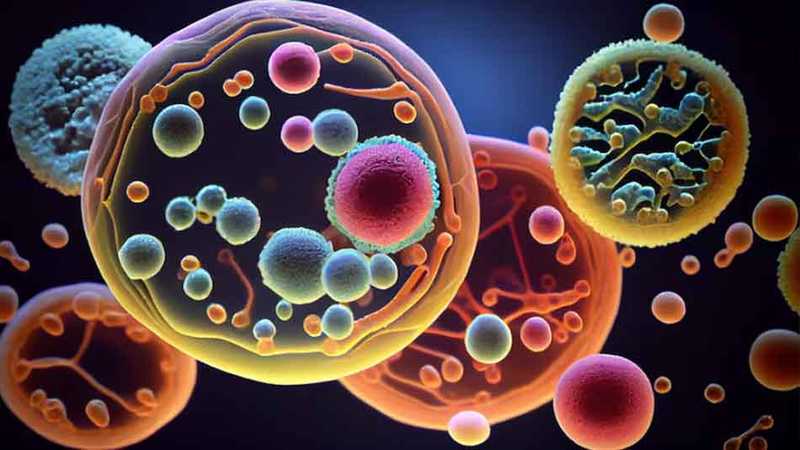
- Exosomes can be defined simply as vesicles secreted by cells. Exosomes are natural vesicles released by cells into the extracellular environment and range in size from 50-200 nanometers. These vesicles are surrounded by a double-layered membrane and contain various RNA and DNA particles and their derivatives, lipids and proteins. They act as a kind of communication network in the body and play a role in signal communication between cells, material transport and tissue healing processes. They act as a kind of start-up in the cells they affect, strengthening their functions and playing a role in the repair of the relevant cell.
- In the first step of exosome formation, a part of the cell membrane is taken into the cell (endocytosis). This membrane folds back into itself to form a small vesicle.
- These vesicles contain DNA, miRNA, mRNA, various proteins, subunits of proteins, and many growth factors such as EGF, FGF, VEGF, which are involved in intracellular metabolic processes.
- It then forms a structure called a "multivesicular body" (MVB), which contains many vesicles.
- Multivesicular bodies fuse with the plasma membrane and the contents of the multivesicular body are excreted outside the cell. These microvesicles are called "exosomes".
Role in Cellular Communication
- Exosomes play an important role in cellular communication. These vesicles regulate a wide range of physiological and pathological processes by transporting information and biomolecules between cells. We can examine their role in cellular communication under several main headings:
- Exosomes transport specific proteins, lipids, RNA (especially microRNA and mRNA), DNA and other biomolecules from source cells to target cells. These transported molecules regulate gene expression and biological processes in target cells, enabling cellular functions paracrine (between close cells) and endocrine (distant intercellular) pathways contribute to its regulation.
- Exosomes carry microRNA, mRNA and DNA, and these molecules regulate gene expression in target cells. MicroRNAs can inhibit the translation of mRNAs in target cells, while transported mRNAs can trigger new protein synthesis. These mechanisms are involved in epigenetics changes and may alter cellular functions.
- Exosomes immune system may help regulate the immune response by carrying signals between cells. Exosomes released from immune cells participate in processes such as antigen presentation, regulation of inflammation and activation of immune cells. At the same time, in some pathogenic conditions, exosomes released by tumor cells can suppress the immune response.
- By carrying exosomes, growth factors and other biomolecules cell proliferation and differentiation can regulate. For example, exosomes released from stem cells contribute to tissue regeneration by promoting proliferation in target cells.
- In summary, exosomes can regulate gene expression, alter cellular functions, modulate immune response and promote cell proliferation through the biomolecules they carry in intercellular communication. Due to their versatile nature, exosomes have a critical role in physiological and pathological processes.
- Discovery and History of Exosomes Exosomes are nanovesicles released into the environment by all known cells. Following their first discovery in the 1980s, they were thought of as cell debris responsible for removing unwanted molecules from the cell, but studies in the last 20 years have revealed that these vesicles have important physiological functions. These vesicles, which can be obtained from all body fluids, play an important role in many biological activities such as intercellular communication, signal transduction, transfer of genetic material and regulation of immunological response.
Biological Functions of Exosomes
- Intracellular Communication
- Gene and Protein Transfer
- Regulatory Effect on Inflammation and Immune Responses
Benefits and Uses of Exosomes
-The cargo they carry, their immunomodulatory role and their ability to enable intercellular communication suggest that these nanocarriers could be used for therapeutic purposes. The fact that exosomes already exist as natural carriers, their high biodistribution and stability in plasma make them a suitable candidate for therapeutic applications. Therapeutic applications of exosomes can be divided into two categories: using exosomes on their own or designing them as a carrier for an exogenic molecule.
Exosome Production and Isolation Methods
- Exosome production can be accomplished through natural biological processes or cell culture in the laboratory.
Mechanism of Natural Exosome Secretion
- Inside the cell, small vesicles form inside structures called endosomes. These structures mature from early endosomes to form multivesicular bodies (MVBs). MVBs fuse with the cell plasma membrane and release the small vesicles they contain as exosomes. These exosomes deliver signaling molecules to surrounding cells.
Exosome Production in the Laboratory:
- Specific cell types are often used for exosome production in the laboratory. Usually, specific cell types such as stem cells (such as mesenchymal stem cells), immune cells (macrophages, dendritic cells), cancer cells or fibroblasts are selected. These cells are cultured in a suitable medium.
- As cells grow and multiply, they produce exosomes and release them into the culture medium. To collect the exosomes that accumulate in the culture medium
- Isolation allows the purification of exosomes from culture media. Common techniques used for this isolation are: centrifugation, filtration and polymer precipitation, size separation, binding to antibodies raised against specific proteins present on the exosome surface.
Various analysis methods are used to check the quality and purity of isolated exosomes. These analyses are performed to determine the surface proteins of exosomes, their size and the biomolecules they contain. Methods such as flow cytometry, Western blot, nanoparticle tracking analysis (NTA) are commonly used.
- As a result of these steps, exosomes isolated from cells in the laboratory are made available for therapeutic or research use.
Exosome Generation from Different Cell Types
- Exosomes of animal originare extracellular vesicles, usually isolated from animal cells or biological fluids of animals (blood, milk, urine, etc.). These exosomes are secreted by cells to enable intercellular communication and contain biomolecules such as proteins, lipids, RNA
- : Exosomes can be isolated from biological fluids of animals such as plasma, serum, milk and urine. Milk exosomes are of particular interest because they are readily available in large quantities.
- Exosomes can also be isolated from animal cell lines. The cell line of interest is cultured and grown to secrete exosomes. In this process, the growth medium of the cells usually contains exosome-free serum.
Plant exosome productionis the process of isolating and purifying extracellular vesicles from plants. These exosomes are nano-sized vesicles secreted from the cells of plants and contain biologically active components.
Exosomes and extracellular vesicles
Both are known as small structures secreted by cells and involved in intercellular communication. However, they have some fundamental differences.
Exosomes usually range in diameter from 30-150 nanometers.Other Extracellular Vesicles (Microvesicles and Apoptotic Bodies): Microvesicles are usually between 100-1000 nanometers and apoptotic bodies can be larger than 1000 nanometers.
Exosomes: Consist of internal cellular structures inside the cell, called early endosomes. Early endosomes develop into multivesicular bodies (MVBs) inside the cell, which fuse to the cell membrane and export the exosomes.Microvesicles: Formed by outward budding of the cell membrane.Apoptotic Bodies: Formed from cells that break down during cell death (apoptosis) and are usually larger in size. Exosomes: Can transport various biomolecules such as growth factors, cytokines, proteins, lipids, mRNA, microRNA. Exosomes play an important role in cellular signal transduction and intercellular information exchange. Microvesicles: They can have a wider range of contents. They can transport cell membrane components, proteins, some types of RNA and other biomolecules. Apoptotic Bodies: It can transport cellular wastes such as DNA, RNA, organelle remnants formed by the breakdown of cells during apoptotic processes.
- Exosomes: Mediate the transmission of biochemical signals between cells. Plays a role in many biological processes such as tissue regeneration, immune response, tumor development and inflammation Microvesicles: Similarly, they provide intercellular communication, but are usually the result of cellular stress or activation and may have a broader context.Apoptotic Bodies: It occurs mainly to clear cellular waste and is related to the process of cell death.
Therapeutic Potential of Exosomes
- Exosome therapy is a method that can be used in the treatment of various degenerative diseases and orthopedic trauma treatments as well as for aesthetic purposes. Since the mixture injected within the scope of exosome therapy also contains growth factors, it can trigger the natural regeneration process by strengthening hair follicles and stimulating cells in people with hair loss problems. The most important feature of exosome therapy is that the basic needs of the skin are produced naturally, resulting in a fuller skin and increased skin brightness. As the quality of skin tissue increases, scars on the skin are reduced. As a result, pores are minimized. Exosome is used in skin regeneration treatments because it provides tissue repair in the tissue in which it is used.
How is Exosoma Treatment Performed?
Approximately 15-30 minutes before the application, the patient's skin is cleaned and local anesthetic cream is applied. In exosome treatment, exosomes taken from stem cells are injected dermally into the designated area with the help of microneedles or can be applied epidermally with the help of dermapen. Their use together with skin renewal treatments such as gold needle and laser gives very successful results. After the exosome skin serum is injected, repair begins in the damaged cells. Patients can easily continue their daily lives after the procedure.
How Many Sessions Is Exosome Treatment Performed?
The number of sessions varies according to the applied area and the exosome material used. While a single session is sufficient in some areas, 2-3 sessions can be performed in some areas with high degeneration. Session intervals should be minimum 21-28 days. The treatment protocol should be determined by your doctor.
What are the side effects that can be seen after exosome application?
Redness and swelling at the injection site, allergic reactions, itching and redness, temporary pain and discomfort, bruising in the application area may occur.
"The content of this page is for informational purposes only, please consult your doctor for diagnosis and treatment."